
AONTAS Statement on Voluntary and Community Sector Cuts in Northern Ireland
AONTAS Statement on Voluntary and Community Sector Cuts in Northern Ireland
AONTAS stands in solidarity with our members and partners in the Community and Voluntary Sector in Northern Ireland following the UK Government’s decision to impose funding cuts on the sector. These cuts will significantly impact essential adult and community education programmes across Northern Ireland. We would like to offer our support to NICVA as they coordinate efforts to advocate for a reversal of this decision.
Recent decisions by the UK Government will see Northern Ireland’s Local Growth Fund (LGF) reduced from £25 million to £9.2 million from April 2026. This fund was the successor to the UK Shared Prosperity Fund and, before that, the European Structural and Investment Programme. This 64% decrease represents a substantial contraction in the resources available to support people with complex health, wellbeing, and employability needs.
Under the previous UK Shared Prosperity Fund, £57 million was invested in Northern Ireland over two years to address economic inactivity. Fifteen of the eighteen funded projects were delivered by Voluntary and Community Sector (VCS) organisations, supporting 23,942 beneficiaries, including disabled people, women, young people (including those experiencing homelessness), minority ethnic communities, carers, people with convictions, and adults aged 50+ (NICVA, 2025). Many of these organisations now face severe instability, with implications for the 650 staff employed through UKSPF-funded VCS projects alone.
This contraction comes at a time when participation in lifelong learning is in decline in the region. In Northern Ireland, the 2025 participation rate was 35%, well below the UK average of 42% and set against a wider UK decline of 10% in adult learning (Phipps et al., 2025). These trends are particularly concerning given the OECD’s finding that broad and continuous participation in adult learning is essential for economic resilience and social inclusion (OECD, 2025).
A recent report published by NICVA (Pivotal, 2025) highlighted that VCS organisations are dealing with complex, overlapping social challenges, including ill health, lack of skills, trauma, domestic abuse, criminal records, rural isolation, childcare deficits, housing insecurity, and fear of losing benefits. This is a key area of work providing the support needed to help those facing the most challenges. As a result, community-based learning and employability supports remain critical for tackling social exclusion and preparing individuals for participation in public and economic life.
AONTAS have written to the Department of the Taoiseach, asking officials to consider:
The crossborder implications of declining investment in learning, skills, and inclusion supports in Northern Ireland.
Opportunities to advocate for stability in community education and employability focused support within wider North–South frameworks. These include the PEACEPLUS programme funding, the North–South Ministerial Council, and collaborations between public bodies and education institutes.
Exploration of crossborder collaboration in community education, skills alignment, and social inclusion through the Shared Island Unit.
Our intention is to ensure that those facing the most significant structural barriers, many of whom live, learn, or work across border regions, are not further disadvantaged by the current funding transition. AONTAS work across the Island of Ireland, we carry out research and capacity building projects in Northern Ireland, and are a founding member of the Alliance for Lifelong Learning in NI.
News
The very latest news from the adult and community education sector
News
AONTAS Seeks Community Education Network (CEN) Members for Proposed Training Links Network
26 March 2026
AONTAS invites our Community Education Network members to join the AONTAS Training Links Network Written by Lorraine O’Connor Published on...
Blog
Futures in Focus: Advancing Adult Learning in Ireland Through NEAAL 2026–2027
19 March 2026
New European Agenda for Adult Learning Ireland 2026-2027: Futures in Focus: Strengthening Adult Learning for a Changing World Written by...
News
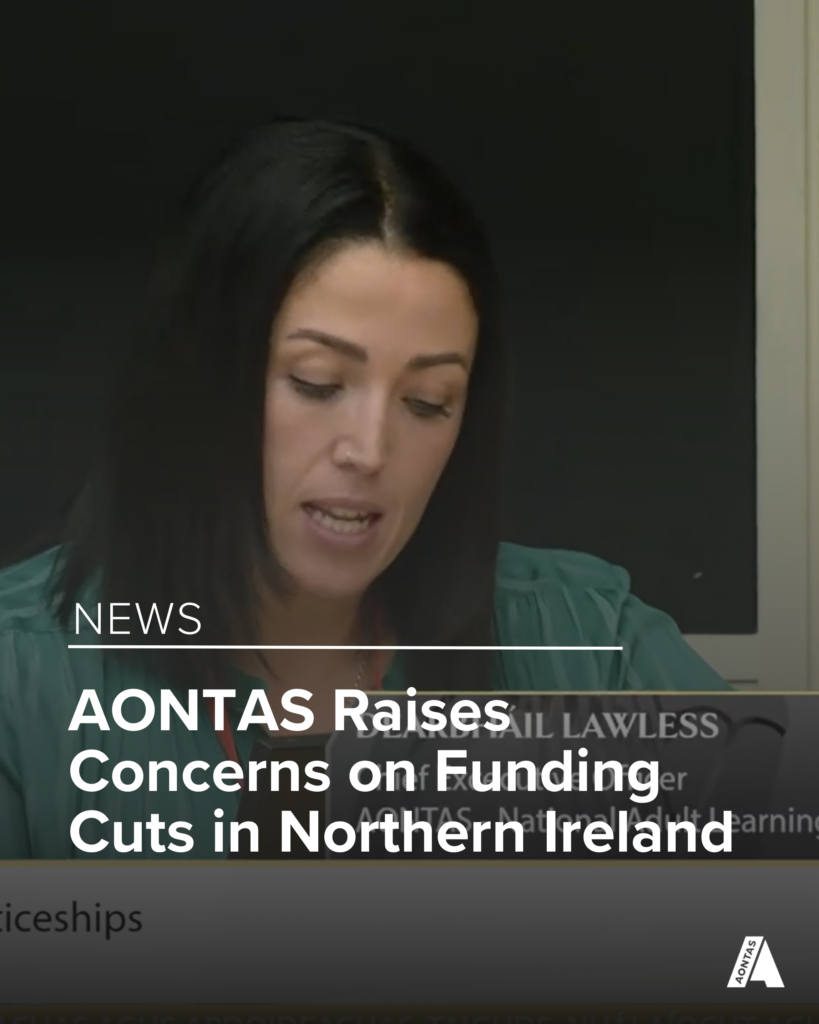
AONTAS Raises Concerns on Funding Cuts in Northern Ireland
12 March 2026
AONTAS Raises Concerns on Funding Cuts in Northern Ireland Written by Thomas Ogbemudia Published on March 12, 2026 Share This...
Blog
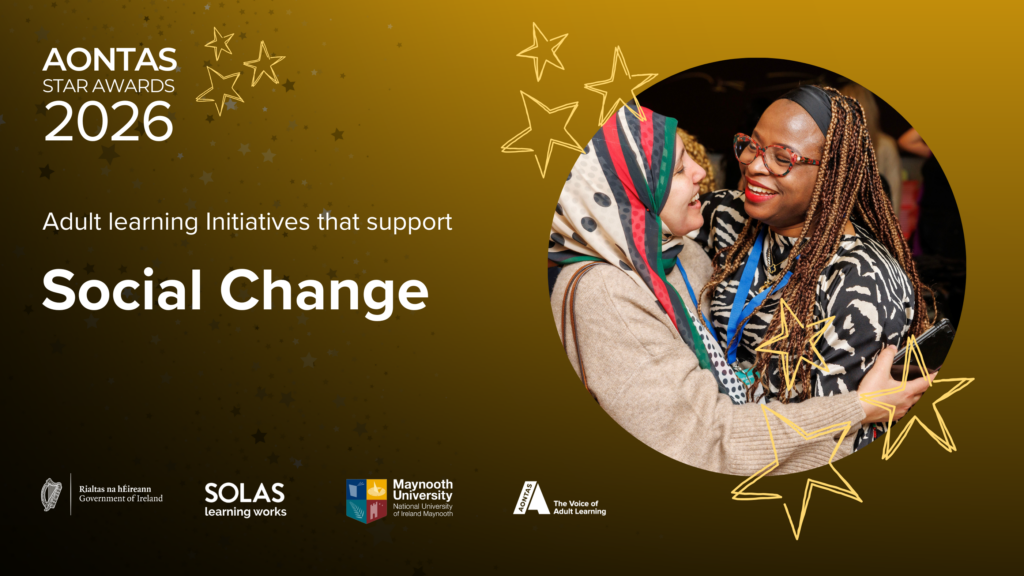
Celebrating Change-Makers: STAR Awards Social Change Finalists 2026
5 March 2026
Supporting Social Change at the AONTAS STAR Awards 2026 Written by Thomas Ogbemudia Published on March 5, 2026 Share This...
Blog

Supporting Third Level Access and Engagement at the AONTAS STAR Awards 2026
5 March 2026
Supporting Third Level Access and Engagement at the AONTAS STAR Awards 2026 Written by Thomas Ogbemudia Published on March 5,...
Blog
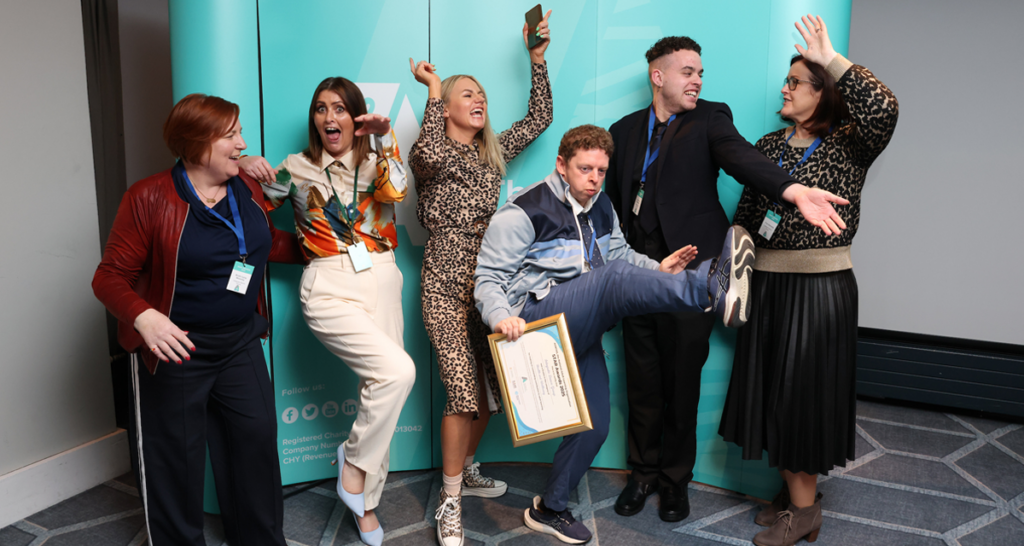
Supporting Health and Wellbeing at the AONTAS STAR Awards 2026
5 March 2026
Supporting Health and Wellbeing at the AONTAS STAR Awards 2026 Written by Thomas Ogbemudia Published on March 5, 2026 Share...
AONTAS Statement on Voluntary and Community Sector Cuts in Northern Ireland
AONTAS Statement on Voluntary and Community Sector Cuts in Northern Ireland
AONTAS stands in solidarity with our members and partners in the Community and Voluntary Sector in Northern Ireland following the UK Government’s decision to impose funding cuts on the sector. These cuts will significantly impact essential adult and community education programmes across Northern Ireland. We would like to offer our support to NICVA as they coordinate efforts to advocate for a reversal of this decision.
Recent decisions by the UK Government will see Northern Ireland’s Local Growth Fund (LGF) reduced from £25 million to £9.2 million from April 2026. This fund was the successor to the UK Shared Prosperity Fund and, before that, the European Structural and Investment Programme. This 64% decrease represents a substantial contraction in the resources available to support people with complex health, wellbeing, and employability needs.
Under the previous UK Shared Prosperity Fund, £57 million was invested in Northern Ireland over two years to address economic inactivity. Fifteen of the eighteen funded projects were delivered by Voluntary and Community Sector (VCS) organisations, supporting 23,942 beneficiaries, including disabled people, women, young people (including those experiencing homelessness), minority ethnic communities, carers, people with convictions, and adults aged 50+ (NICVA, 2025). Many of these organisations now face severe instability, with implications for the 650 staff employed through UKSPF-funded VCS projects alone.
This contraction comes at a time when participation in lifelong learning is in decline in the region. In Northern Ireland, the 2025 participation rate was 35%, well below the UK average of 42% and set against a wider UK decline of 10% in adult learning (Phipps et al., 2025). These trends are particularly concerning given the OECD’s finding that broad and continuous participation in adult learning is essential for economic resilience and social inclusion (OECD, 2025).
A recent report published by NICVA (Pivotal, 2025) highlighted that VCS organisations are dealing with complex, overlapping social challenges, including ill health, lack of skills, trauma, domestic abuse, criminal records, rural isolation, childcare deficits, housing insecurity, and fear of losing benefits. This is a key area of work providing the support needed to help those facing the most challenges. As a result, community-based learning and employability supports remain critical for tackling social exclusion and preparing individuals for participation in public and economic life.
AONTAS have written to the Department of the Taoiseach, asking officials to consider:
The crossborder implications of declining investment in learning, skills, and inclusion supports in Northern Ireland.
Opportunities to advocate for stability in community education and employability focused support within wider North–South frameworks. These include the PEACEPLUS programme funding, the North–South Ministerial Council, and collaborations between public bodies and education institutes.
Exploration of crossborder collaboration in community education, skills alignment, and social inclusion through the Shared Island Unit.
Our intention is to ensure that those facing the most significant structural barriers, many of whom live, learn, or work across border regions, are not further disadvantaged by the current funding transition. AONTAS work across the Island of Ireland, we carry out research and capacity building projects in Northern Ireland, and are a founding member of the Alliance for Lifelong Learning in NI.
News
The very latest news from the adult and community education sector
News
AONTAS Seeks Community Education Network (CEN) Members for Proposed Training Links Network
26 March 2026
AONTAS invites our Community Education Network members to join the AONTAS Training Links Network Written by Lorraine O’Connor Published on...
Blog
Futures in Focus: Advancing Adult Learning in Ireland Through NEAAL 2026–2027
19 March 2026
New European Agenda for Adult Learning Ireland 2026-2027: Futures in Focus: Strengthening Adult Learning for a Changing World Written by...
News
AONTAS Raises Concerns on Funding Cuts in Northern Ireland
12 March 2026
AONTAS Raises Concerns on Funding Cuts in Northern Ireland Written by Thomas Ogbemudia Published on March 12, 2026 Share This...
Blog
Celebrating Change-Makers: STAR Awards Social Change Finalists 2026
5 March 2026
Supporting Social Change at the AONTAS STAR Awards 2026 Written by Thomas Ogbemudia Published on March 5, 2026 Share This...
Blog
Supporting Third Level Access and Engagement at the AONTAS STAR Awards 2026
5 March 2026
Supporting Third Level Access and Engagement at the AONTAS STAR Awards 2026 Written by Thomas Ogbemudia Published on March 5,...
Blog
Supporting Health and Wellbeing at the AONTAS STAR Awards 2026
5 March 2026
Supporting Health and Wellbeing at the AONTAS STAR Awards 2026 Written by Thomas Ogbemudia Published on March 5, 2026 Share...