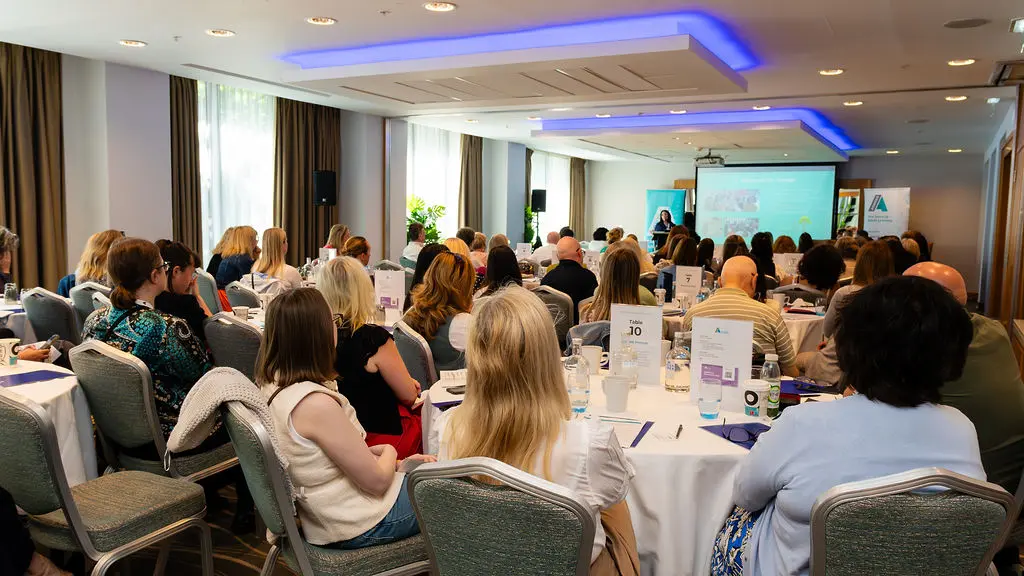

The event was opened by Rosemary Moreland, the Adult Learner Journal editor, who shared her perspective on lifelong learning:
“The key message I take is that lifelong learning is as natural and as necessary as breathing. Whilst we must continue to strive for equality and social justice, particularly with regard to adult learning and education, as lifelong learners, we must be ready to adapt, change and forge the next chapter of adult and community education, so that locally and globally, we really do “build back better”.
 The Voices of Learners
Karen O’Donovan an adult learner from Clonakilty in West Cork shared her inspirational story of returning to education during the COVID-19 pandemic, describing her course as “a lifeline”. She told the group that it is “never a bad day when you learn something new”.
Advice from Professor Koen De Pryck
In his keynote address, Professor De Pryck reflected on the impact of COVID-19 on education, in particular on those already disadvantaged because of challenges such as socioeconomic class, digital poverty and language barriers.
While acknowledging some benefits to remote learning and education provision, such increased flexibility and opportunities to enhance home-life and family commitments, Professor De Pryck emphasised the impact of the pandemic on community cohesion and the decreased sense of belonging experienced by many, which is essential for preventing learner drop-out rates in education.
He provided practical suggestions that educators can incorporate into their teaching models to increase learner engagement and a sense of social cohesion in the online classroom. These suggestions include:
- Including interactive and community-building activities
- Organising group-assignments in smaller groups
- Consider using video-based forums as an alternative to text-based forums and feedback
- Building forums with strong community-building purposes, such as an ice-breaker forum, a social forum, an introduction forum
- Allowing students to bring their specific – and informal – language to the course, so they can establish their social presence. This includes the posting of emoji’s, memes, gifs, pictures and abbreviations
- Assigning students as moderators in forums
- Consider presenting somewhat controversial topics in forums to start the conversation
- Modelling the behaviour expected from your students, including spending time participating in forums

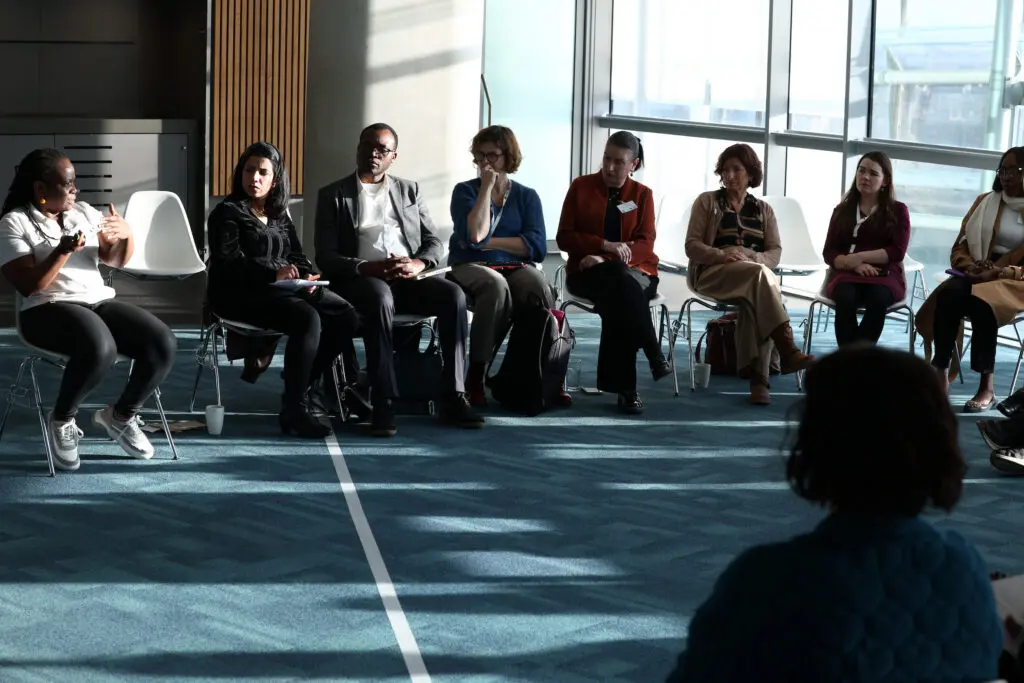
Participants were invited to join breakout rooms, and groups discussed the challenges of returning to education, and of providing support to adult learners, during the pandemic. The contributions demonstrated the creativity shown by the adult, community and higher education sector as we learned to continually respond, reflect and adapt together in an uncertain and changing situation.
An author panel discussion provided reflections on this year’s journal articles, which encompass a diverse array of experiences, approaches, and insights into adult education in the midst of the pandemic. The author panel included:
- Isobel Hawthorne-Steele – Facing the Challenges of Creating Online Critical Dialogical Spaces for Community Learning Pathways into Higher Education (HE)
- Suzanne Parkinson – Evaluating the Relevance of Learner Identity for Educators and Adult Learners Post-COVID-19
- Michelle Maher – Online Political Education in a Time of Crisis: A Case Study of the Development of an Online Learning Community with SHESchool
- Neil Spears – Storm on the Island – The Lived Experience of Working-Class Adult Learners in Higher Education
- John Hoben – Reviving and Reinstating Adult-Educators’ Agency within Adult and Post-Secondary Programmes
- Stephanie Larkin – A Pandemic Was Not in Our Plan!
- Michael Kenny – Blended to Online Learning during the COVID-19 Pandemic: A Case Study of Practice
More information on these authors, and each of their articles, is available in The Adult Learner 2021, which is a free online resource accessible to all. You can read the new journal here and for more information click here.
For more information, please contact Giuliana Peña, AONTAS Project Officer, at: gpena@aontas.com
AONTAS is thankful to the editorial board for their time and commitment to the Adult Learner Journal.
Editorial Board Members:
Rosemary Moreland, Ulster University, Editor
José Pedro Amorim, University of Porto
Koen De Pryck, Vrije Universiteit Brussel and the University of Twente
Bairbre Fleming, University College Dublin
Nuala Glanton, Adult Education Officers’ Association of Ireland
Fran Kennedy, Adult Education Officers’ Association of Ireland
Deirdre Lynskey, Queen’s University Belfast
David Mallows, University College London
Helen Murphy, Waterford Institute of Technology
Luke Murtagh, National University of Ireland, Maynooth
Stephen O’Brien, University College Cork
Jane O’Kelly, Dublin City University, Book and Policy Review Editor
Niamh O’Reilly, AONTAS, Chairperson
Maria Slowey, Dublin City University