
A New Strategy for Further Education and Training: What ‘Creating Futures’ Means for Adult Learners & Community Education
SOLAS has published Creating Futures: The Further Education and Training Strategy 2026–2030. AONTAS welcomes the ambition at the heart of this strategy and sets out here what it means for adult learners, for community education, and for the work still ahead.
The new FET Strategy, Creating Futures, launched in May 2026 by SOLAS and the Department of Further and Higher Education, Research, Innovation and Science, builds on the work done to increase access and participation in adult education, linking the sector with economic and social development.
The strategy has four goals:
Equipping people with future-ready knowledge and skills
Building inclusion for prosperity and social cohesion
Developing quality alongside innovation
Collaborating for impact
Underpinning all of it is a vision of FET as a central pillar of a unified tertiary education system, sitting alongside higher education as an integral part of Ireland’s education system.
The progress made under the previous strategy, Future FET: Transforming Learning 2020–2024, is heartening. One in ten adults (438,000 people) were participating in FET in 2024, up 33.4% since 2018. Learner progression within FET grew by 27.2% between 2019 and 2024, and 6,000 people moved between further and higher education in 2024 alone. These are not small numbers. They represent real changes in real lives.
But there is more work to do to support inclusion. While participation in FET has grown significantly, recently published data on lifelong learning in Ireland shows that the “Matthew Effect” remains stubbornly present: people who already have higher levels of education and secure employment are most likely to benefit from learning opportunities. Growth in overall numbers is welcome, but that growth must include those furthest from formal education.
Progress on Learner Voice: Putting learners at the centre
One of the most significant commitments in Creating Futures is the goal to place learners “at the heart of decision-making” (p.21) throughout the system. AONTAS is pleased to be named in the strategy as a partner in designing an annual learner survey, which will feed directly into how FET evolves over the coming years. We will take that responsibility seriously. Learner Voice has always been central to our work, and we look forward to ensuring that this mechanism captures what matters most.
There are further welcome commitments in this strategy, which have the potential to move learner voice beyond consultation. These include embedding learner voices in governance structures and boards, in addition to learner councils and forums (p. 21). Opportunities to participate at all levels of decision-making can ensure that learners experiences and insights drive inclusive, policy and service design.
Inclusion is a key goal of this strategy
Creating Futures makes inclusion a strategic priority. The strategy commits to targeted approaches for groups who face barriers to participation, people with disabilities, lone parents, carers, older people, Travellers and Roma communities, and those living in areas of concentrated disadvantage (p. 21). It also outlines the intent to incorporate universal design principles across FET provision, and to embed access and equality in how programmes are planned and practitioners are trained.
The strategy includes a commitment that AONTAS has long advocated for:
“coordinating with the Department of Social Protection and other Government departments to ensure consistency in learner payments and grants, and to signpost learners facing structural barriers around childcare, transport, and housing to supports” (p.22).
These barriers to education are constant themes in our Learner Voice research, and it is encouraging to see them named explicitly.
Equally welcome is the explicit commitment that there can be no learner left behind in the transition to digital skills and AI literacy. Access to the tools of the future must be universal not a benefit reserved for those who are already advantaged.
Community Education: A central role to play
It is encouraging that the Community Education Framework (2024) is named in Creating Futures as a continuing priority (p.20). Community education is rightly described as foundational to literacy, active citizenship, social cohesion, and the support of diverse communities. The strategy commits to community education excelling in the delivery of holistic skills, including foundational, interpersonal, expressive, and participative skills
Challenges to overcome
The Community Education Framework commits to making funding for community education available to all, while ensuring a consistent and transparent approach to funding processes. Central to this strategy is the recognition that community education produces unaccredited outcomes that foster inclusion, participation and engagement in education. AONTAS will continue to advocate for the formal recognition of these outcomes within funding allocation processes. We will also champion the development of sustainable funding mechanisms that effectively reach the community education sector. This is essential to ensuring that the strategy’s commitment to recognising the “different strengths and specialisms of providers” is fully realised in practice.
We also note that while the strategy rightly emphasises the importance of a skilled and agile FET workforce, the working conditions of practitioners, including those working in community education, often on precarious contracts, are not addressed. Sustainable quality requires sustainable employment. AONTAS will bring member evidence on this to the implementation process.
Education and Democracy- A missed opportunity?
While we welcome the references to active citizenship (p. 10 & p.20) we feel that the strategy could have focused more on education as a pillar of our democracy. Disappointingly, the word “democracy” does not appear once in the strategy, whilst many educators and learners in FET play a core role in supporting and developing our democratic structures and values.
Democratic integrity has emerged as a central focus of EU policy discussions, especially in the context of rising social and political polarisation across Europe. By promoting active citizenship and social cohesion FET in Ireland contributes to the foundations of a healthy and flourishing democracy, one in which values such as equality, inclusion, and participation are upheld. This represents a vital public good, the broader societal value of which cannot be overstated.
As Ireland approaches our tenure of Presidency of the EU Council in 2026, AONTAS will highlight the centrality of adult education to our democracy.
What comes next?
Creating Futures is a broadly progressive strategy. It positions FET as a driver of both economic development and social inclusion, and it is right to do so. AONTAS welcomes it as a foundation on which to build.
But strategies are only as good as their implementation. The coming months will see Performance Agreements developed with each ETB, and an implementation plan published. These are the moments where the commitments in Creating Futures will either be given real teeth or remain aspirational. AONTAS will engage actively at every stage, bringing the voices of adult learners, community education providers, and the members who work with those furthest from education to the table.
The test of this strategy will not be in its goals, but in whether it reaches the people who need it most.
You can read the full Creating Futures Strategy on the SOLAS website.
News
The very latest news from the adult and community education sector
Blog

The People Behind the STAR Awards: Third-Level Access & Engagement
20 October 2026
The People Behind the STAR Awards: Third-Level Access & Engagement Written by Brian Desmond Published on October 20, 2026 Share...
News
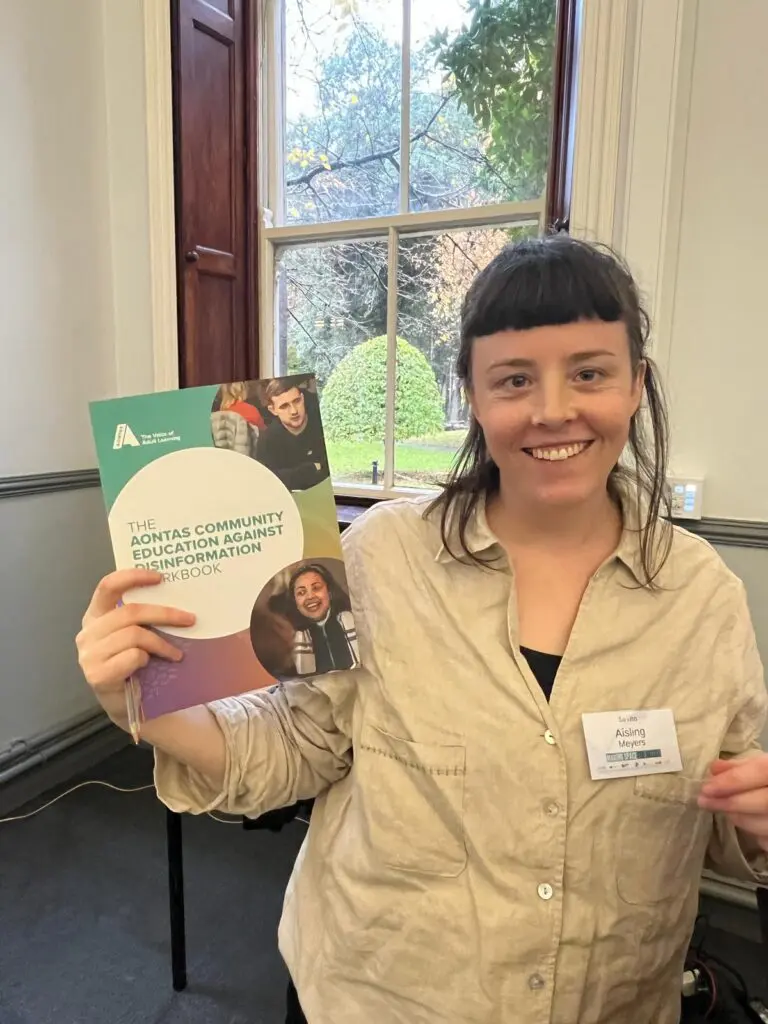
AONTAS Community Education Against Disinformation Project Nominated for Media Literacy Award
16 October 2026
AONTAS Community Education Against Disinformation Project Nominated for Media Literacy Award Written by Rachel Ryan Published on October 16, 2026...
Blog
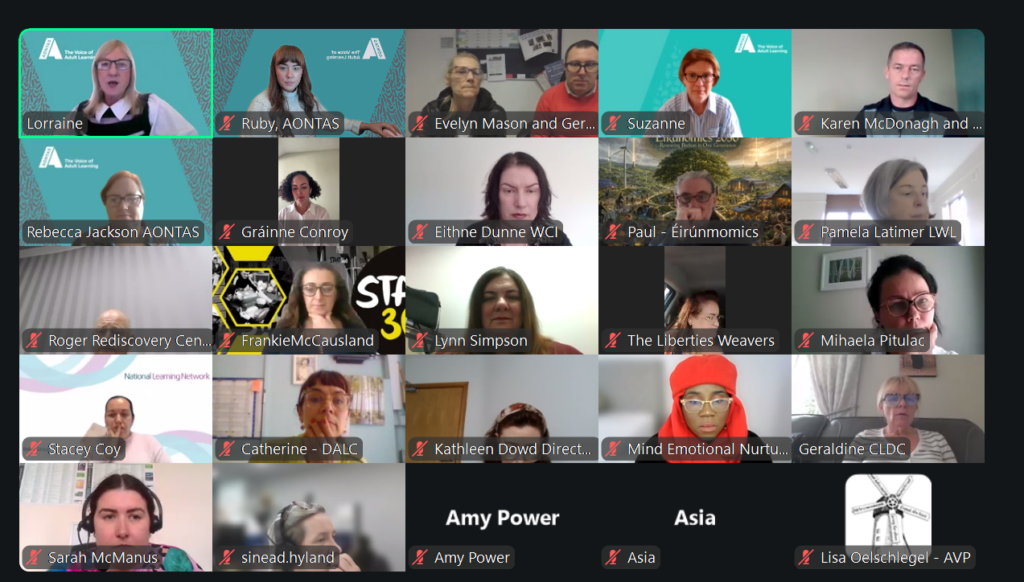
Beyond Funding: Building Capacity, Skills and Expertise for Lasting Change Through the AONTAS Community Education Network
9 October 2026
Beyond Funding: Building Capacity, Skills and Expertise for Lasting Change Through Our Community Education Network Written by Lorraine O’Connor Published...
Blog
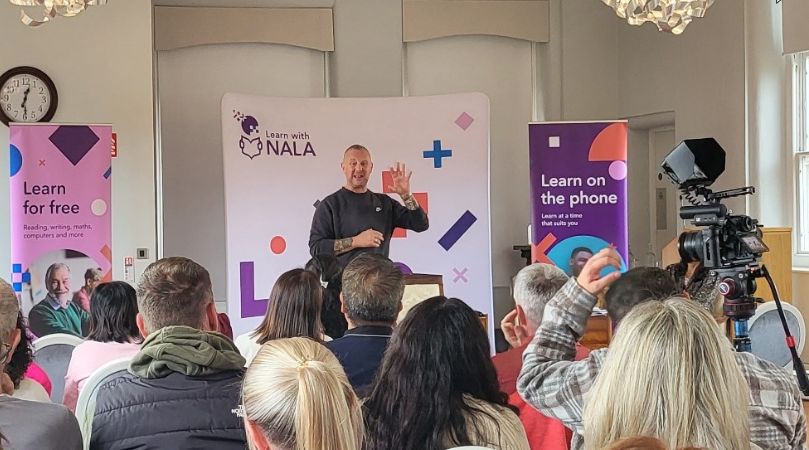
Reducing Barriers with Learn with NALA Accreditation
9 October 2026
Reducing Barriers with Learn with NALA Accreditation Written by Brian Desmond Published on October 9, 2026 Share This Attended by...
Blog
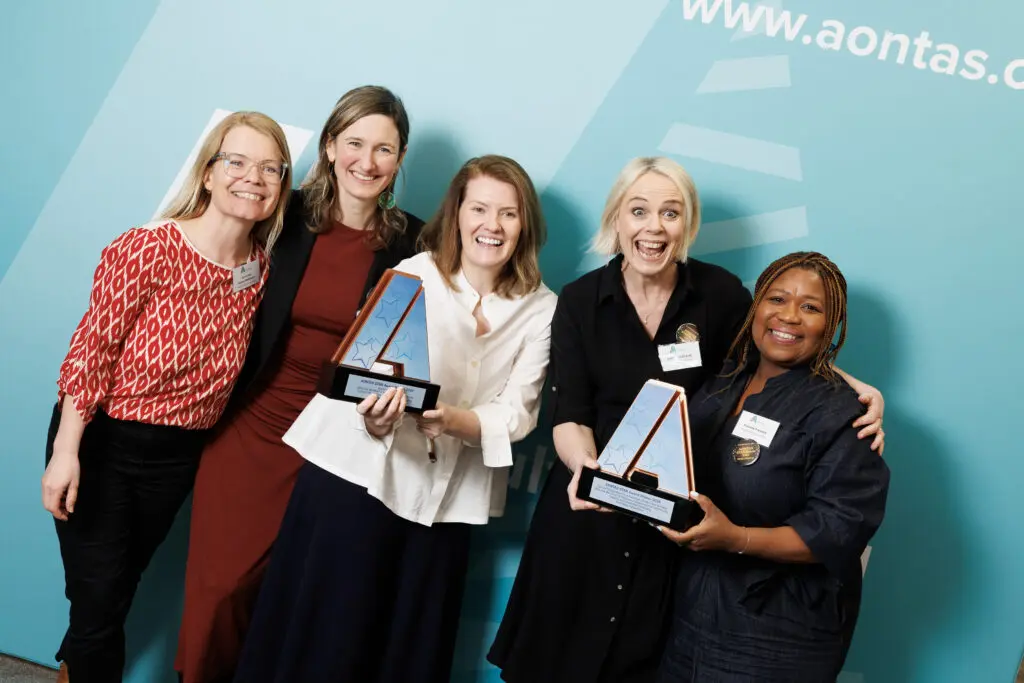
The People Behind the STAR Awards: Social Change
9 October 2026
The People Behind the STAR Awards: Social Change Written by Brian Desmond Published on October 9, 2026 Share This (Part...
News
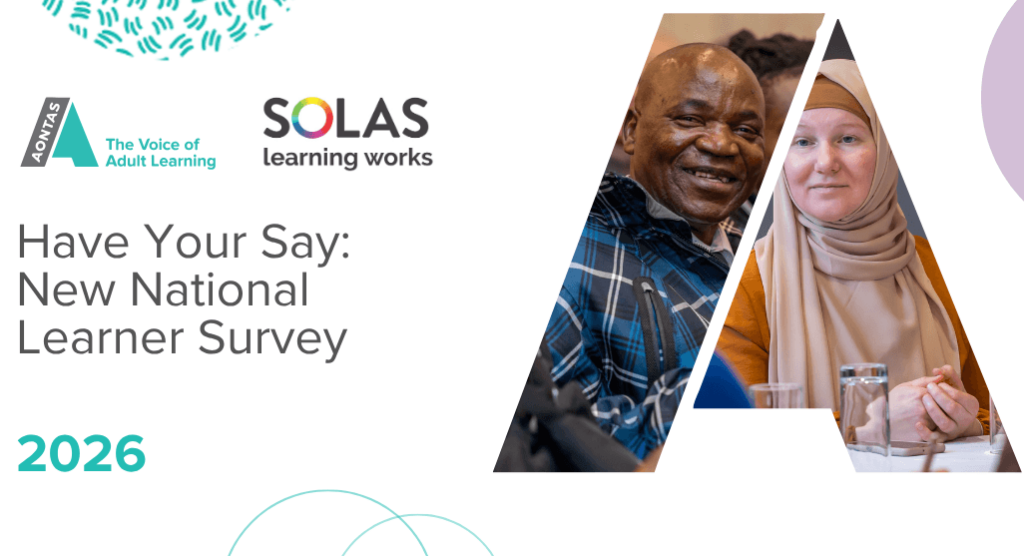
AONTAS Members Have Their Say on New National Learner Survey
9 October 2026
AONTAS Members Have Their Say on New National Learner Survey Written by Rachel Ryan Published on October 9, 2026 Share...
A New Strategy for Further Education and Training: What ‘Creating Futures’ Means for Adult Learners & Community Education
SOLAS has published Creating Futures: The Further Education and Training Strategy 2026–2030. AONTAS welcomes the ambition at the heart of this strategy and sets out here what it means for adult learners, for community education, and for the work still ahead.
The new FET Strategy, Creating Futures, launched in May 2026 by SOLAS and the Department of Further and Higher Education, Research, Innovation and Science, builds on the work done to increase access and participation in adult education, linking the sector with economic and social development.
The strategy has four goals:
Equipping people with future-ready knowledge and skills
Building inclusion for prosperity and social cohesion
Developing quality alongside innovation
Collaborating for impact
Underpinning all of it is a vision of FET as a central pillar of a unified tertiary education system, sitting alongside higher education as an integral part of Ireland’s education system.
The progress made under the previous strategy, Future FET: Transforming Learning 2020–2024, is heartening. One in ten adults (438,000 people) were participating in FET in 2024, up 33.4% since 2018. Learner progression within FET grew by 27.2% between 2019 and 2024, and 6,000 people moved between further and higher education in 2024 alone. These are not small numbers. They represent real changes in real lives.
But there is more work to do to support inclusion. While participation in FET has grown significantly, recently published data on lifelong learning in Ireland shows that the “Matthew Effect” remains stubbornly present: people who already have higher levels of education and secure employment are most likely to benefit from learning opportunities. Growth in overall numbers is welcome, but that growth must include those furthest from formal education.
Progress on Learner Voice: Putting learners at the centre
One of the most significant commitments in Creating Futures is the goal to place learners “at the heart of decision-making” (p.21) throughout the system. AONTAS is pleased to be named in the strategy as a partner in designing an annual learner survey, which will feed directly into how FET evolves over the coming years. We will take that responsibility seriously. Learner Voice has always been central to our work, and we look forward to ensuring that this mechanism captures what matters most.
There are further welcome commitments in this strategy, which have the potential to move learner voice beyond consultation. These include embedding learner voices in governance structures and boards, in addition to learner councils and forums (p. 21). Opportunities to participate at all levels of decision-making can ensure that learners experiences and insights drive inclusive, policy and service design.
Inclusion is a key goal of this strategy
Creating Futures makes inclusion a strategic priority. The strategy commits to targeted approaches for groups who face barriers to participation, people with disabilities, lone parents, carers, older people, Travellers and Roma communities, and those living in areas of concentrated disadvantage (p. 21). It also outlines the intent to incorporate universal design principles across FET provision, and to embed access and equality in how programmes are planned and practitioners are trained.
The strategy includes a commitment that AONTAS has long advocated for:
“coordinating with the Department of Social Protection and other Government departments to ensure consistency in learner payments and grants, and to signpost learners facing structural barriers around childcare, transport, and housing to supports” (p.22).
These barriers to education are constant themes in our Learner Voice research, and it is encouraging to see them named explicitly.
Equally welcome is the explicit commitment that there can be no learner left behind in the transition to digital skills and AI literacy. Access to the tools of the future must be universal not a benefit reserved for those who are already advantaged.
Community Education: A central role to play
It is encouraging that the Community Education Framework (2024) is named in Creating Futures as a continuing priority (p.20). Community education is rightly described as foundational to literacy, active citizenship, social cohesion, and the support of diverse communities. The strategy commits to community education excelling in the delivery of holistic skills, including foundational, interpersonal, expressive, and participative skills
Challenges to overcome
The Community Education Framework commits to making funding for community education available to all, while ensuring a consistent and transparent approach to funding processes. Central to this strategy is the recognition that community education produces unaccredited outcomes that foster inclusion, participation and engagement in education. AONTAS will continue to advocate for the formal recognition of these outcomes within funding allocation processes. We will also champion the development of sustainable funding mechanisms that effectively reach the community education sector. This is essential to ensuring that the strategy’s commitment to recognising the “different strengths and specialisms of providers” is fully realised in practice.
We also note that while the strategy rightly emphasises the importance of a skilled and agile FET workforce, the working conditions of practitioners, including those working in community education, often on precarious contracts, are not addressed. Sustainable quality requires sustainable employment. AONTAS will bring member evidence on this to the implementation process.
Education and Democracy- A missed opportunity?
While we welcome the references to active citizenship (p. 10 & p.20) we feel that the strategy could have focused more on education as a pillar of our democracy. Disappointingly, the word “democracy” does not appear once in the strategy, whilst many educators and learners in FET play a core role in supporting and developing our democratic structures and values.
Democratic integrity has emerged as a central focus of EU policy discussions, especially in the context of rising social and political polarisation across Europe. By promoting active citizenship and social cohesion FET in Ireland contributes to the foundations of a healthy and flourishing democracy, one in which values such as equality, inclusion, and participation are upheld. This represents a vital public good, the broader societal value of which cannot be overstated.
As Ireland approaches our tenure of Presidency of the EU Council in 2026, AONTAS will highlight the centrality of adult education to our democracy.
What comes next?
Creating Futures is a broadly progressive strategy. It positions FET as a driver of both economic development and social inclusion, and it is right to do so. AONTAS welcomes it as a foundation on which to build.
But strategies are only as good as their implementation. The coming months will see Performance Agreements developed with each ETB, and an implementation plan published. These are the moments where the commitments in Creating Futures will either be given real teeth or remain aspirational. AONTAS will engage actively at every stage, bringing the voices of adult learners, community education providers, and the members who work with those furthest from education to the table.
The test of this strategy will not be in its goals, but in whether it reaches the people who need it most.
You can read the full Creating Futures Strategy on the SOLAS website.
News
The very latest news from the adult and community education sector
Blog
The People Behind the STAR Awards: Third-Level Access & Engagement
20 October 2026
The People Behind the STAR Awards: Third-Level Access & Engagement Written by Brian Desmond Published on October 20, 2026 Share...
News
AONTAS Community Education Against Disinformation Project Nominated for Media Literacy Award
16 October 2026
AONTAS Community Education Against Disinformation Project Nominated for Media Literacy Award Written by Rachel Ryan Published on October 16, 2026...
Blog
Beyond Funding: Building Capacity, Skills and Expertise for Lasting Change Through the AONTAS Community Education Network
9 October 2026
Beyond Funding: Building Capacity, Skills and Expertise for Lasting Change Through Our Community Education Network Written by Lorraine O’Connor Published...
Blog
Reducing Barriers with Learn with NALA Accreditation
9 October 2026
Reducing Barriers with Learn with NALA Accreditation Written by Brian Desmond Published on October 9, 2026 Share This Attended by...
Blog
The People Behind the STAR Awards: Social Change
9 October 2026
The People Behind the STAR Awards: Social Change Written by Brian Desmond Published on October 9, 2026 Share This (Part...
News
AONTAS Members Have Their Say on New National Learner Survey
9 October 2026
AONTAS Members Have Their Say on New National Learner Survey Written by Rachel Ryan Published on October 9, 2026 Share...