
This month AONTAS CEO, Niamh O’Reilly was invited by the Department of Education and Skills (DES) to play an influential role on the recently formed DES COVID-19 Tertiary Education Steering Group. Tertiary education includes further and higher education. In addition, Niamh O’Reilly is charged with chairing a subcommittee called the Mitigating Educational Disadvantage including Community Education during the COVID-19 Crisis Working Group (MED Group).
This news is significant because it means that AONTAS’ members, and all adult and community education learners, now have a voice to raise the full range of challenges currently at hand and directly feed this into DES. Absolutely every effort is being made to ensure that the issues facing adult and community education, providers and learners, are heard and acted upon.
Furthermore, AONTAS is committed to delivering on our vision for educational equality for all adults and is working with key stakeholders and experts on the MED Group to identify solutions to the crisis in the short and medium term. Additionally, AONTAS is working with and on behalf of members through a range of communications: member phone calls, surveys, online meetings, weekly webinars with AONTAS CEO, AONTAS newsletter and through social media.
We welcome engagement with members as we believe practitioners offer valuable insights that will offer solutions to the immediate questions facing the sector as a whole, as well as planning for the range of long-term ramifications that lie ahead.
AONTAS supporting our members and adult learners in the Crisis
AONTAS has been actively working with and on behalf of its members, learners and a range of stakeholders to tackle the critical issues currently being faced. This activity has consisted of
- Engaging with approximately 100 community education organisations, with a personal call around to identify their issues in order to raise these with the Department of Education and Skills;
- Developing a plan to authentically engage with learners to identify learners’ needs during the crisis. A virtual FET Learner Forum is planned and social media and newsletters are being utilised to enhance communication with learners;
- Developing a free online ‘Resource Hub’;
- Utilising the Freephone One Step Up Information and Referral Service as a point of contact for learners in the tertiary education sector seeking information, sharing updates on their current learning experiences, and highlighting challenges faced;
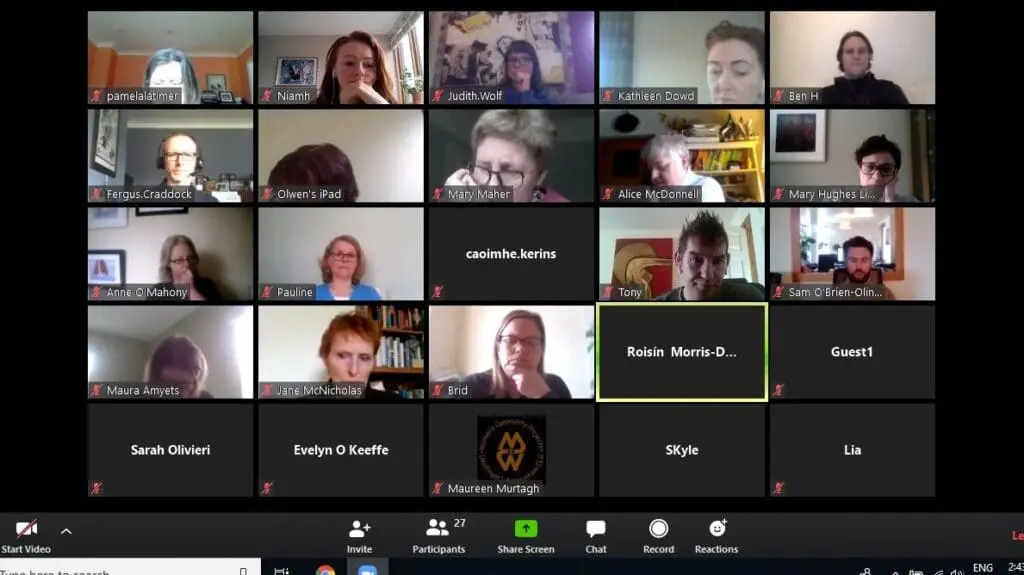
- Hosting an online member engagement webinar weekly with CEO Niamh O’Reilly to keep members updated and to hear their issues (every Wednesday at 2pm);
- Detailing communication to members from CEO with updates through AONTAS’ social media and the news section of www.aontas.com;
- Expanding the Learners as Leaders capacity-building programme as part of the European Agenda for Adult Learning and increasing the number of learners expected to participate in 2020.
Mitigating Educational Disadvantage during the COVID-19 Crisis
You can learn more about the outputs from the Mitigating Educational Disadvantage Working Group in the resources provided at the end of this page.
As well as implementing its Work Continuity Plan in response to the COVID-19 outbreak, AONTAS has been engaging with the Department of Education and Skills daily on issues impacting our members during this crisis. AONTAS CEO Niamh O’Reilly is currently part of a COVID-19 Tertiary Education Steering Group, meaning that the organisation is centrally involved in the Government’s planning for managing challenges facing tertiary education at this time. The group also consists of: The Higher Education Authority, SOLAS, Education and Training Boards Ireland, The Irish Universities Association, The Technological Higher Education Association, The Union of Students in Ireland, Technical University Dublin and Higher Education Colleges Association.
This Group is chaired by the DES Assistant Secretary, William Beausang, who earlier this month participated in the AONTAS Policy Day as part of the Adult Learners’ Festival 2020. The work being carried out involves regular teleconferences which includes the Taoiseach’s advisor and Minister of State for Higher Education Mary Mitchell O’Connor. In these meetings at crucial times CEO Niamh O’Reilly has brought forward issues that are exacerbating disadvantage within community education. Briefing papers on the key issues have been submitted and responses to the issues posed have been received.
The Mitigating Educational Disadvantage including Community Education issues during the COVID-19 Crisis Group (MED Group) gives specific space to community education issues. The MED Working Group held its first meeting on 26th March. The group includes representatives from various organisations and individuals with expertise in the area. Additional members representing various stakeholders will be invited to join and/or contribute to the work of the group where necessary.
In response to the risk that educational disadvantage is exacerbated, the key purpose of this Group is in the first instance to scope out the main issues arising from the COVID-19 public health emergency impacting learning by disadvantaged learners across all aspects of Tertiary Education. Its terms of reference are as follows:
- Undertake / support the collation of information, evidence and data on impacts on disadvantaged students / learners including in relation to the scope for and extent of continuity of learning;
- Ensure knowledge and communication of issues affecting disadvantaged learners cross over into other elements of COVID-19 planning for the Tertiary system;
- Propose appropriate feasible short-term responses that are designed to mitigate these impacts;
- Identify options for further examination to ensure that the requirements of disadvantaged students and learners inform ongoing / future contingency and scenario planning; and
- Track the consistency and evenness of current provision across the different areas of tertiary education identifying any areas for priority action.
“We are specifically tasked with focusing on marginalised groups and community education. This will take up the majority of my time in the coming weeks as it will involve our daily involvement in three subcommittees but this is a very positive development for our members. We can actively work towards supporting disadvantaged groups immediately”
– Niamh O’Reilly, AONTAS CEO.
The four subcommittees AONTAS is most actively involved in are
- COVID-19 Tertiary Education Steering Group (meets Tuesdays and Thursdays)
- Mitigating Educational Disadvantage including Community Education (meets Mondays and Thursdays).
- Immediate Operations Coordination Group (meets Mondays and Wednesdays)
- The Quality, Integrity and Reputation Working Group (meets Tuesdays)
A number of immediate, medium and longer-term working groups have been established for the tertiary sector. The working groups are composed of various stakeholders and will entail Standing Working Groups for key thematic areas that cross a range of sectors and ‘Pop Up’ Working Groups to develop solutions for specific but important tasks. They involve the secretariat, engagement with a range of stakeholders and developing and delivering work streams. The other working groups currently in operation are:
- The Apprenticeship Working Group;
- The English Language Education Working Group;
- The International Higher Education Working Group;
- The Finance Working Group
Being in this unique position to represent AONTAS’ members’ issues and the perspectives of learners to the key decision-makers responsible for policy formation within the Department of Education is the product of intensive long-term lobbying. Lobbying can take many forms and AONTAS has been cultivating critical and constructive relationships with a range of important stakeholders in order to urgently and forcefully ensure that adult and community education achieves parity of esteem with other equally important constituents within the Irish education system. More specific details around AONTAS’ actions to progress learners’ rights and ensure adequate sustainable funding for the sector can be found in the following publications:
- Policy Day Paper, as part of the Adult Learners’ Festival 2020
- General Election 2020 analysis of political party manifestos
- Pre-Budget Submission 2020: a Vision for Educational Equality
- Response to Budget 2020
- AONTAS Strategic Plan 2019-2022
Although we will all have to embrace uncertainty for the time being, AONTAS is doing everything in its power to mitigate the negative impact on its members and all adult learners, particularly the most vulnerable learners who may be hit the hardest. There will also be numerous challenges that lie far beyond the remit and scope of the abovementioned Governmental Working Groups which will inevitably have some impact on adult and community education providers as well. For example, The Central Statistics Office says there are now over 500,000 people either out of work or receiving pandemic support payments and the Central Bank is estimating that unemployment could reach 25%. In this scenario for a post-crisis Ireland there would potentially be thousands of people who previously would not have considered returning to learning. People who now find themselves in a radically different financial and social situation and may begin looking into their education and training options. A surge in the volume of people hoping to retrain, upskill and change their career trajectory is entirely likely. However, enhancing employability and improving opportunities to gain decent and dignified sustainable work covers only one cohort of adult and community learners, albeit an important one with a fundamental set of needs. Those most affected, including current learners, their families and communities may need deeper supports and a multifaceted approach that can also heal trauma and provide a safe space for making and reconnecting with friends and neighbours. Fortunately, a longstanding locally embedded and nationally effective educational infrastructure exists for this parallel and equally important set of needs. In this regard the sector can be harnessed to develop new ways of coping with the variety of crises people may face and it is especially familiar with how best to support people in adapting to new and difficult life circumstances. Adult and community education are well placed and proven to deliver such a range of positive outcomes.
As Ireland transitions to a new and unprecedented economic, political and social landscape the important role played by the sector within tertiary education, local communities and society as a whole has never been more important. A serious concern is that those who were already at an educational disadvantage before COVID-19 struck may now be left even further behind in its wake. The work carried out by the sector is inherently and by design a means and an end for not only mitigating against some of the most severe forms of inequality which plague our society, but also for repairing the social fabric that has been strained and damaged during this emergency. To play its much-needed role in supporting the country’s current struggle and its future recovery the sector must be adequately resourced and properly invested in by Government. A new era of austerity would just replicate the failures of the previous one and pile on more problems than it can ever hope to solve. This obsolete approach to the latest global recession simply is not viable or credible in 2020. Rather than just another extra cost to the public expenditure, building the capacity of adult and community learners is an opportunity to reap guaranteed social, economic and political dividends. A national strategy to deliver full parity of esteem for adult and community learners with their equally important counterparts in further and higher education would see Ireland investing in its people and local communities at a time when it’s most needed.
AONTAS Membership and Engagement Update Weekly Webinars
Click here for more information on these weekly webinars with the AONTAS CEO. These webinars are open to members only. Further information on AONTAS membership is available here.
Outputs from the Mitigating Educational Disadvantage Working Group