
Sharing Learner Voice Research at the Fourth International Scuola Democratica Conference
Introduction
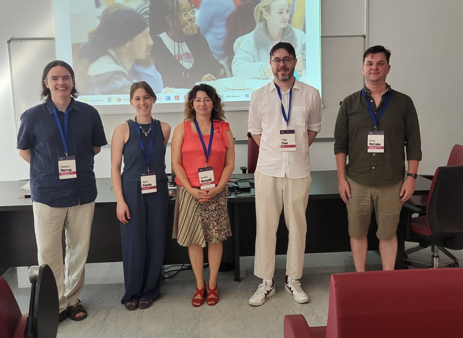
Our Research Officer, Philip Finn, outlines his recent participation, alongside Thomas Murray (Head of Research), in sharing AONTAS research at the Fourth International Conference of Scuola Democratica at the Sapienza University of Rome.
With a broad focus on the theme of Learning for Democracy / Democracy for Learning the conference brought together international researchers discussing education and training as instruments of emancipation and as living practices of democratic citizenship.
Sharing our Learner Voice Research
We organised a panel called Learner Voice for Democratic Learning as part of the conference to present the research that AONTAS carries out to other researchers. The seminar provided a rare opportunity to step back from data collection to think about and discuss critical questions for the practice and research of Learner Voice.
Our Head of Research, Dr Thomas Murray presented a paper on “Adult Education and Democratic Learning: Listening to Learner Voice”. Drawing on the experience of the National FET Learner Forum (NFLF), his contribution explored whether Learner Voice can foster democratic dialogue between adult learners, policy makers and practitioners.
My own paper on “Disability, Social Justice and the Power of Learner Voice” delved into the specifics of the NFLF as a Learner Voice mechanism, illustrating the empirical findings relating to what learners with disabilities have to say about their experience of FET provision and any changes they would like to see within FET provision.
Learning about Learner Voice in Other Contexts
Our panel provided a space for researchers to come together to discuss Learner Voice mechanisms for adult learners in different contexts.
Giulia Elardo shared her research on using “dialogue tables” across Italian universities to explore students’ attitudes towards personal and collective participation in Learner Voice structures.
Carmel Berendi spoke about how the practice of learning festivals, within the UNESCO Global Network of Learning Cities, facilitates ‘bottom up’ spaces of democratic participation and democratic learning for adult learners.
Kevin McCabe showed how the increased use of digital application systems for course registration excludes digitally vulnerable learners, arguing that learners need to be meaningfully heard in decision-making processes about the designs of these systems.
Making Connections with Researchers
Beyond our specific panel, the conference provided a fantastic opportunity to engage with contemporary education research in social inclusion, inequalities, and democracy, and to make connections with researchers working in similar fields.
My own highlights included learning about “Casetta Rossa”, a self-managed community space located in Rome, where a community led Italian language school provides the basis for mutual recognition, intercultural learning, and everyday practices of democratic engagement.
Similarly, the everyday practice of democracy animated reflections on a sit-strike organised by Afghan refugee youth in Gothenburg, Sweden, in 2017. These interventions were a form of democratic learning in which the shared lived experience of participants translated into understanding about justice, rights and belonging.
In-between the presentation panels, there were opportunities to talk with colleagues and learn more about the research they carry out, for example, discussing the challenges faced in carrying out a learner voice project in an Italian secondary school, or how collaborative research with learners can lead to shared understandings of the world.
Engaging with the Big Themes in Educational Research
Keynote addresses at the conference responded to the big issues impacting educational institutions, educators, and learners today with a focus on creeping threats to democracy, including authoritarianism, far-right politics, and artificial intelligence.
Radhika Gorur outlined the how the increasing focus on digital tools to collect more and more data as a basis for education policymaking undermines democratic participation by limiting who has access to knowledge and decision-making power.
In thinking about a renewal of democracy, Gert Biesta argued that rather than teaching shared values of democracy, what is required is a focus on “uncommon values”, where recognition of plurality and difference offer a foundational starting point for debates around the collective good.
Conclusion
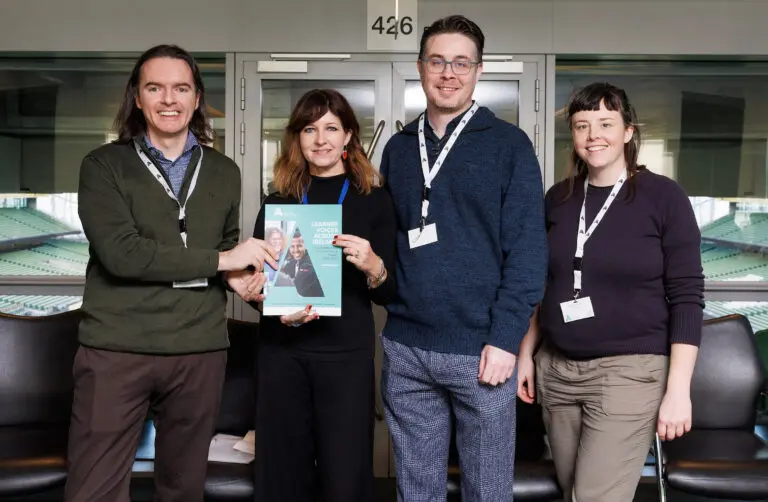
The AONTAS research team will continue these conversations in developing the theoretical and methodological underpinnings of our Learner Voice research and practice. AONTAS will also continue to share our Learner Voice research with the publication of the Learner Voices Across Ireland Report 2025-2026 in October.
News
The very latest news from the adult and community education sector
Blog
Beyond Funding: Building Capacity, Skills and Expertise for Lasting Change Through the AONTAS Community Education Network
9 October 2026
Beyond Funding: Building Capacity, Skills and Expertise for Lasting Change Through Our Community Education Network Written by Lorraine O’Connor Published...
Blog
Reducing Barriers with Learn with NALA Accreditation
9 October 2026
Reducing Barriers with Learn with NALA Accreditation Written by Brian Desmond Published on October 9, 2026 Share This Attended by...
Blog
The People Behind the STAR Awards: Social Change
9 October 2026
The People Behind the STAR Awards: Social Change Written by Brian Desmond Published on October 9, 2026 Share This (Part...
News
AONTAS Members Have Their Say on New National Learner Survey
9 October 2026
AONTAS Members Have Their Say on New National Learner Survey Written by Rachel Ryan Published on October 9, 2026 Share...
News
What does Budget 2027 mean for adult and community education?
8 October 2026
What does Budget 2027 mean for adult and community education? Written by Conor Thompson Published on October 8, 2026 Share...
Blog
The People Behind the STAR Awards: Global Citizenship Education
7 October 2026
The People Behind the STAR Awards: Global Citizenship Education Written by Brian Desmond Published on October 7, 2026 Share This...