
A New Strategy for Tertiary Education: What This Means for Adult Learners & Community Education

What is tertiary education?
The Department of Further and Higher Education, Research, Innovation and Science has published a new Tertiary Education Strategy.
Tertiary education represents all education after secondary school, bringing together higher education, further education and training, and adult and community education. The idea that a unified, tertiary education system can support learner journeys and deliver better outcomes for has been developed over recent years, beginning with the Unified Tertiary System Policy (2022).
AONTAS support the concept of tertiary education, and we have consistently advocated for equal recognition and parity of esteem amongst all forms of adult learning in the tertiary system, whether that takes place in a community centre or a college science lab.
What does the strategy want to achieve?
The strategy aims to “support a more connected and responsive tertiary education system strengthening collaboration across further education and training and higher education.” There are elements of the Strategy that we welcome, and some aspects which raise concerns.
The strategy has four pillars:
Pillar 1: Skills and Research for Competitiveness and Economic Success
Pillar 2: Equality and Opportunity
Pillar 3 System Performance, Governance and Adaptability
Pillar 4: Transformational Growth & Lifelong Learning
Commitment to inclusive and equitable system
There is a welcome commitment to equality and inclusion in Pillar 2- with the intention to “foster a more inclusive and equitable system by reducing financial, structural, and systemic barriers, ensuring that all learners regardless of background can access, engage with, and complete their chosen education,” (p.7). This, along with Strategic Objective 2’s commitment to expanding access routes, increasing financial and non-financial supports, and fostering a learner-centred environment (p.17), echoes AONTAS’ position from our tertiary strategy consultation submission.
Pre-apprenticeship initiatives and structured placements are positive additions in principle but should be informed by learners’ voiced needs and aligned with Public Sector Human Rights and Equality Duty goals.

Supports for Disabled Learners
On disability support and inclusion, there are several welcome actions. Transitions to education and employment are identified as priorities, and Universal Design is named as a key enabler of participation across both Higher Education and Further Education and Training. There is also a commitment to expand Fund for Students with Disabilities supports and a commitment to improve pathways to and through education for disabled learners.
All-Island Linkages
The strategy commits to build connections in the tertiary sector both North and South. This is a very welcome objective. We hope this work will encompass all of the tertiary education sector equally, supporting collaboration in FET and adult and community education. This is of particular importance as the Further Education sector in Northern Ireland is facing significant financial challenges currently, whilst cuts to the UK Shared Growth Fund have had a considerable negative impact on adult learners and educators in the voluntary and community sector in the North.
Community Education- Included but a concerning framing
Community education’s crucial role in social cohesion and democratic participation is acknowledged in the strategy. However, the full value of community education in creating social cohesion, empowerment and political consciousness raising is not fully recognised.
AONTAS are concerned about the description of community education in Pillar 4, action 4:
“While community education is an important part of FET, it is necessary to review current provision to ensure it is reaching the intended cohorts. This includes developing a clear position on the role of personal interest courses and their alignment with the strategic objectives of the FET system,” (p. 56).
We feel that the strategy has missed the mark in terms of defining community education. We are unsure where the term ‘personal interest courses’ has come from, and it is not included in the new FET Strategy- Creating Futures 2026-2030, nor the Community Education Framework.
Far beyond ‘personal interest courses’, this form of education is learner-centred and democratic, rooted in dialogue and the co-construction of meaning. It promotes civic engagement and advances equality, often in disadvantaged, disempowered communities. This approach means it is uniquely positioned to address complex societal challenges such as rising inequality, racism, social polarisation, the climate crisis, and declining civic engagement.
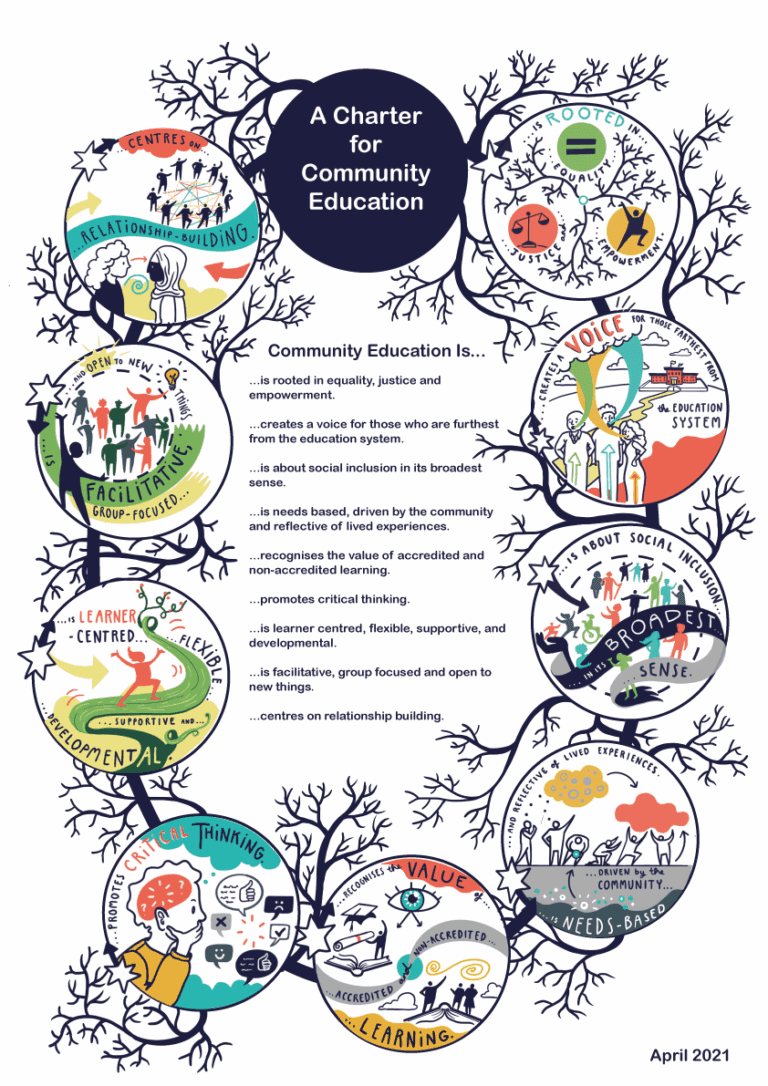
Existing policy frameworks align with this position. The Community Education Framework, references the Charter for Community Education, and provides the following definition:
“Community education is both formal and non-formal learning led by communities for communities to support personal, social, educational, environmental, economic and community development,” (p. 12).
The Framework offers concrete examples of practice also, including how City of Dublin ETB collaborated with Ringsend Irishtown Community Centre (RICC) in combatting disinformation and rising community tension- ultimately leading to the development and roll out of Quality and Qualifications Ireland (QQI) Level 5 Certificate in Social Justice Principles.
The tertiary education strategy’s position on ‘personal interest courses’ has potentially harmful undertones- suggesting that programmes without direct economic and employment outcomes need to be evaluated and questioned as to whether they belong in the tertiary education system- which is ironic given the evidence that community education has the power to bring higher education into communities that are underrepresented on university campuses.
Arts-based education programmes are a core feature of the community education sector. These courses are designed to connect with the personal interests of the participants. If a course is designed to gain the interest of a potential learner and it provides them with social connection, new skills, a passion for learning and the confidence to take on new opportunities, the this is an investment well made, and core to the goal of facilitating access and inclusion in the tertiary education sector.
Through our work in promoting the value of community education and supporting members of our Community Education Network (CEN), AONTAS will continue to highlight the importance of this form of adult learning to Irish democracy.
Democracy and Lifelong Learning: Opportunities Missed
Citizenship and democracy appear in the strategy, but it could have been more fully developed with attached goals and actions. Economic and employment focused education and training dominate throughout- these are essential elements of the strategy, but their dominance offers an incomplete picture of what the tertiary education sector does for Irish society.
Equally, lifelong learning seems to be narrowly framed as upskilling for older workers and learners (p. 53). The UNESCO 2022 5th Global Report on Adult Learning and Education frames lifelong learning explicitly as serving “individual fulfilment, social cohesion and economic prosperity,” not employability alone. Lifelong learning builds critical thinkers, community members, and agents of social change. We will continue to advocate for this broad, progressive vision for lifelong learning as this strategy begins to be implemented.
National Dialogue Forum- What comes next
A National Dialogue Forum consisting of DFHERIS agencies, institutions, learner and researcher representative bodies, trade unions, community and industry representative bodies will be formed to help guide the strategy. The National FET Learner Forum, run by AONTAS and funded by SOLAS, has the potential to support the proposed National Dialogue Forum- ensuring FET learner voices are heard. Representing our over 500 members across the island of Ireland, AONTAS look forward to continued engagement with the National Dialogue Forum to ensure lifelong learning is recognised and valued for the benefits it brings to learners, communities, and society.
Conclusion
The first Tertiary Strategy has a welcome focus on inclusion and accessibility, but is overly economically focused.
Instead of counting how many people we include in an education programme, we need to audit how well we afford recognition to an individual learner in all their complexity. Community education supports personal development by affording recognition to the individual in all their complexity. Enabling individual learners to discover their interests and find their voice is foundational to living a life as well as making a living.
Jobs and employment focused skills are essential, but so too are the civic and democratic skills which hold our society together. Community education teaches these skills, and provides a space for social cohesion to happen.
This work deserves recognition even though its economic outcomes aren’t easily measurable.
The economy is a tool to support a society, and the needs of people and communities must come first. We ask that the strategy recognise community education as part of the tertiary system’s contribution to social cohesion, and that provision be assessed against measures that capture those wider outcomes.
AONTAS believes the voices of learners, and stakeholders are critical to the delivery of this strategy. We welcome the establishment of a National Dialogue Forum, and look forward to future engagement where we can support community education, highlight its core strengths, and make sure learner voice informs the ongoing development of pathways
If you would like to get in touch with AONTAS about our policy and advocacy work, contact Conor at cthompson@aontas.com
You can read the Tertiary Strategy in full here.
News
The very latest news from the adult and community education sector
Blog

The People Behind the STAR Awards: Third-Level Access & Engagement
20 October 2026
The People Behind the STAR Awards: Third-Level Access & Engagement Written by Brian Desmond Published on October 20, 2026 Share...
News
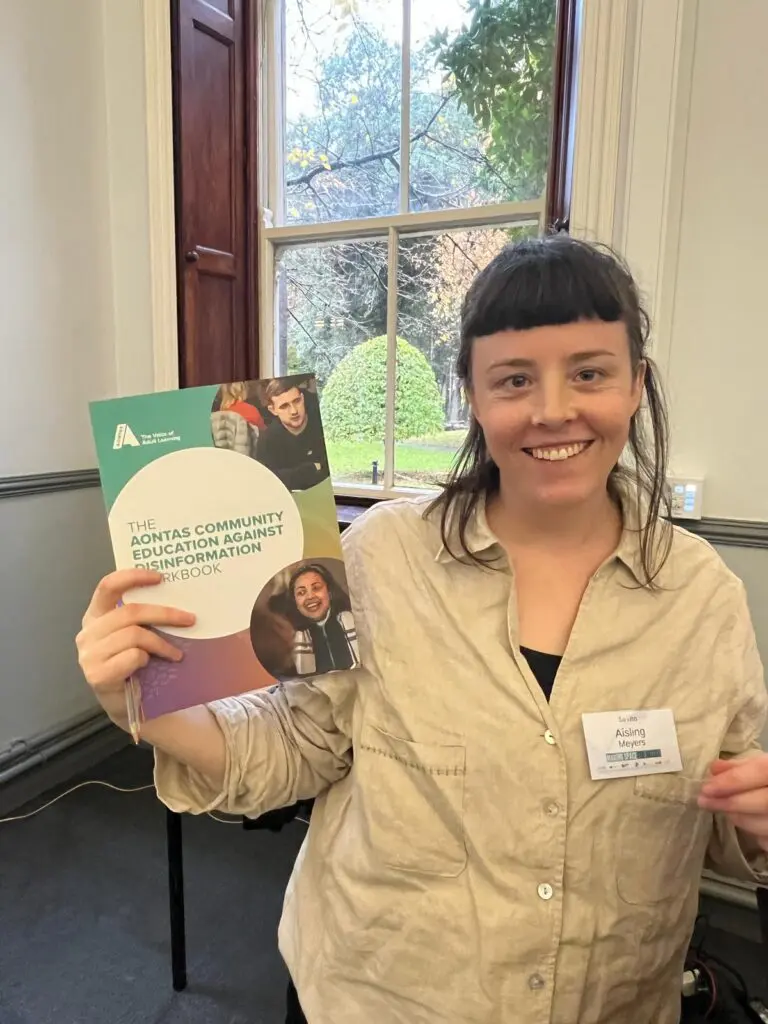
AONTAS Community Education Against Disinformation Project Nominated for Media Literacy Award
16 October 2026
AONTAS Community Education Against Disinformation Project Nominated for Media Literacy Award Written by Rachel Ryan Published on October 16, 2026...
Blog
Beyond Funding: Building Capacity, Skills and Expertise for Lasting Change Through the AONTAS Community Education Network
9 October 2026
Beyond Funding: Building Capacity, Skills and Expertise for Lasting Change Through Our Community Education Network Written by Lorraine O’Connor Published...
Blog
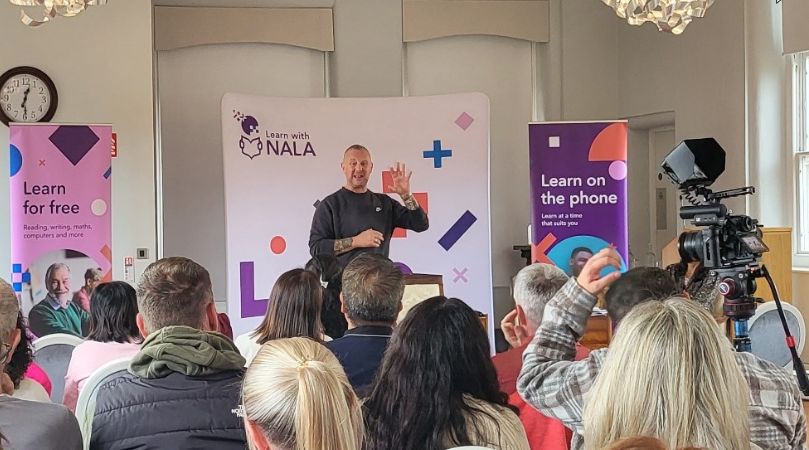
Reducing Barriers with Learn with NALA Accreditation
9 October 2026
Reducing Barriers with Learn with NALA Accreditation Written by Brian Desmond Published on October 9, 2026 Share This Attended by...
Blog
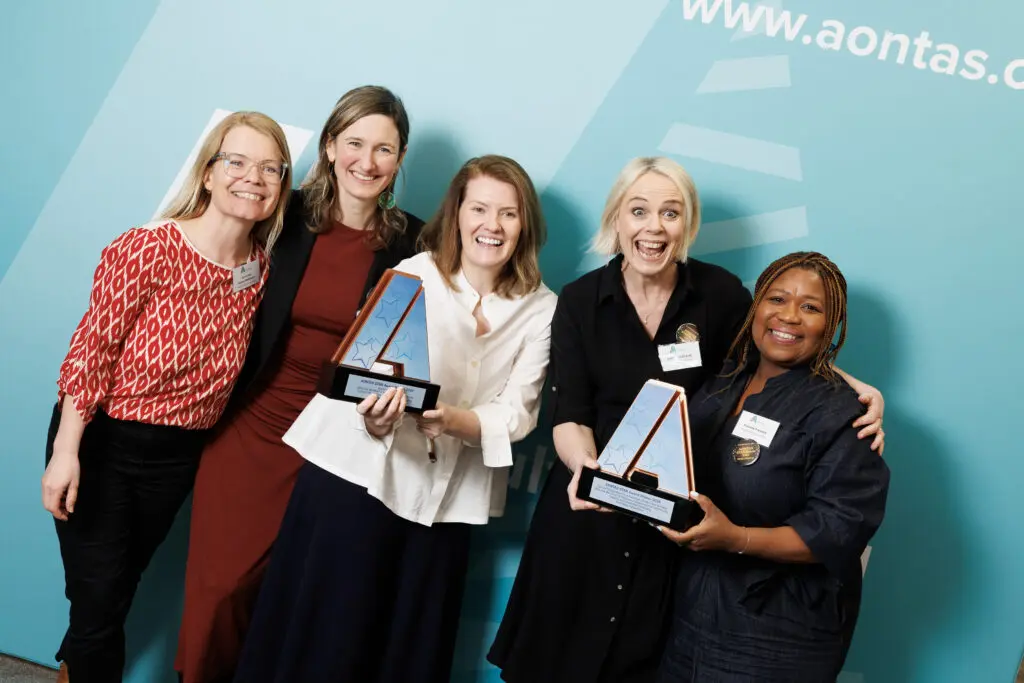
The People Behind the STAR Awards: Social Change
9 October 2026
The People Behind the STAR Awards: Social Change Written by Brian Desmond Published on October 9, 2026 Share This (Part...
News
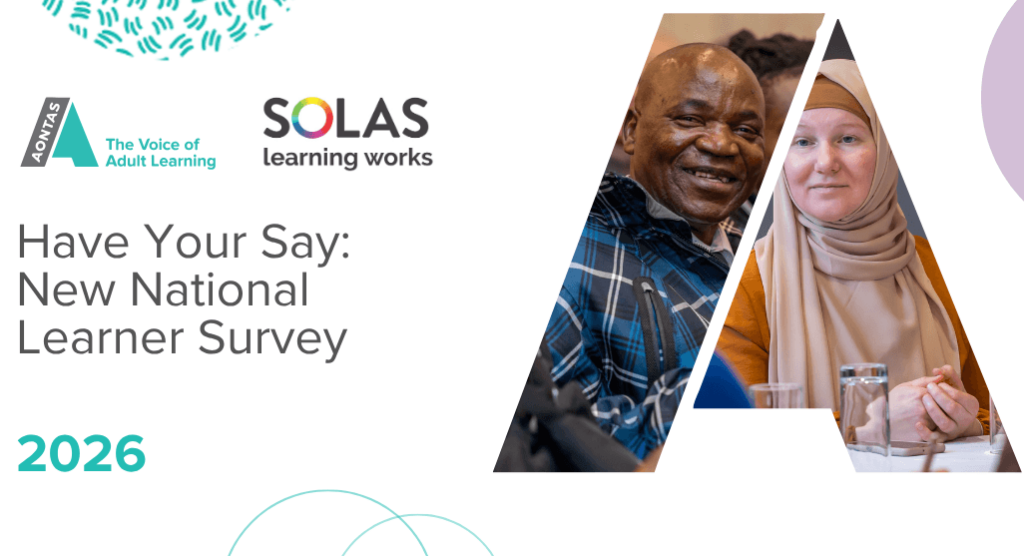
AONTAS Members Have Their Say on New National Learner Survey
9 October 2026
AONTAS Members Have Their Say on New National Learner Survey Written by Rachel Ryan Published on October 9, 2026 Share...
A New Strategy for Tertiary Education: What This Means for Adult Learners & Community Education
What is tertiary education?
The Department of Further and Higher Education, Research, Innovation and Science has published a new Tertiary Education Strategy.
Tertiary education represents all education after secondary school, bringing together higher education, further education and training, and adult and community education. The idea that a unified, tertiary education system can support learner journeys and deliver better outcomes for has been developed over recent years, beginning with the Unified Tertiary System Policy (2022).
AONTAS support the concept of tertiary education, and we have consistently advocated for equal recognition and parity of esteem amongst all forms of adult learning in the tertiary system, whether that takes place in a community centre or a college science lab.
What does the strategy want to achieve?
The strategy aims to “support a more connected and responsive tertiary education system strengthening collaboration across further education and training and higher education.” There are elements of the Strategy that we welcome, and some aspects which raise concerns.
The strategy has four pillars:
Pillar 1: Skills and Research for Competitiveness and Economic Success
Pillar 2: Equality and Opportunity
Pillar 3 System Performance, Governance and Adaptability
Pillar 4: Transformational Growth & Lifelong Learning
Commitment to inclusive and equitable system
There is a welcome commitment to equality and inclusion in Pillar 2- with the intention to “foster a more inclusive and equitable system by reducing financial, structural, and systemic barriers, ensuring that all learners regardless of background can access, engage with, and complete their chosen education,” (p.7). This, along with Strategic Objective 2’s commitment to expanding access routes, increasing financial and non-financial supports, and fostering a learner-centred environment (p.17), echoes AONTAS’ position from our tertiary strategy consultation submission.
Pre-apprenticeship initiatives and structured placements are positive additions in principle but should be informed by learners’ voiced needs and aligned with Public Sector Human Rights and Equality Duty goals.
Supports for Disabled Learners
On disability support and inclusion, there are several welcome actions. Transitions to education and employment are identified as priorities, and Universal Design is named as a key enabler of participation across both Higher Education and Further Education and Training. There is also a commitment to expand Fund for Students with Disabilities supports and a commitment to improve pathways to and through education for disabled learners.
All-Island Linkages
The strategy commits to build connections in the tertiary sector both North and South. This is a very welcome objective. We hope this work will encompass all of the tertiary education sector equally, supporting collaboration in FET and adult and community education. This is of particular importance as the Further Education sector in Northern Ireland is facing significant financial challenges currently, whilst cuts to the UK Shared Growth Fund have had a considerable negative impact on adult learners and educators in the voluntary and community sector in the North.
Community Education- Included but a concerning framing
Community education’s crucial role in social cohesion and democratic participation is acknowledged in the strategy. However, the full value of community education in creating social cohesion, empowerment and political consciousness raising is not fully recognised.
AONTAS are concerned about the description of community education in Pillar 4, action 4:
“While community education is an important part of FET, it is necessary to review current provision to ensure it is reaching the intended cohorts. This includes developing a clear position on the role of personal interest courses and their alignment with the strategic objectives of the FET system,” (p. 56).
We feel that the strategy has missed the mark in terms of defining community education. We are unsure where the term ‘personal interest courses’ has come from, and it is not included in the new FET Strategy- Creating Futures 2026-2030, nor the Community Education Framework.
Far beyond ‘personal interest courses’, this form of education is learner-centred and democratic, rooted in dialogue and the co-construction of meaning. It promotes civic engagement and advances equality, often in disadvantaged, disempowered communities. This approach means it is uniquely positioned to address complex societal challenges such as rising inequality, racism, social polarisation, the climate crisis, and declining civic engagement.
Existing policy frameworks align with this position. The Community Education Framework, references the Charter for Community Education, and provides the following definition:
“Community education is both formal and non-formal learning led by communities for communities to support personal, social, educational, environmental, economic and community development,” (p. 12).
The Framework offers concrete examples of practice also, including how City of Dublin ETB collaborated with Ringsend Irishtown Community Centre (RICC) in combatting disinformation and rising community tension- ultimately leading to the development and roll out of Quality and Qualifications Ireland (QQI) Level 5 Certificate in Social Justice Principles.
The tertiary education strategy’s position on ‘personal interest courses’ has potentially harmful undertones- suggesting that programmes without direct economic and employment outcomes need to be evaluated and questioned as to whether they belong in the tertiary education system- which is ironic given the evidence that community education has the power to bring higher education into communities that are underrepresented on university campuses.
Arts-based education programmes are a core feature of the community education sector. These courses are designed to connect with the personal interests of the participants. If a course is designed to gain the interest of a potential learner and it provides them with social connection, new skills, a passion for learning and the confidence to take on new opportunities, the this is an investment well made, and core to the goal of facilitating access and inclusion in the tertiary education sector.
Through our work in promoting the value of community education and supporting members of our Community Education Network (CEN), AONTAS will continue to highlight the importance of this form of adult learning to Irish democracy.
Democracy and Lifelong Learning: Opportunities Missed
Citizenship and democracy appear in the strategy, but it could have been more fully developed with attached goals and actions. Economic and employment focused education and training dominate throughout- these are essential elements of the strategy, but their dominance offers an incomplete picture of what the tertiary education sector does for Irish society.
Equally, lifelong learning seems to be narrowly framed as upskilling for older workers and learners (p. 53). The UNESCO 2022 5th Global Report on Adult Learning and Education frames lifelong learning explicitly as serving “individual fulfilment, social cohesion and economic prosperity,” not employability alone. Lifelong learning builds critical thinkers, community members, and agents of social change. We will continue to advocate for this broad, progressive vision for lifelong learning as this strategy begins to be implemented.
National Dialogue Forum- What comes next
A National Dialogue Forum consisting of DFHERIS agencies, institutions, learner and researcher representative bodies, trade unions, community and industry representative bodies will be formed to help guide the strategy. The National FET Learner Forum, run by AONTAS and funded by SOLAS, has the potential to support the proposed National Dialogue Forum- ensuring FET learner voices are heard. Representing our over 500 members across the island of Ireland, AONTAS look forward to continued engagement with the National Dialogue Forum to ensure lifelong learning is recognised and valued for the benefits it brings to learners, communities, and society.
Conclusion
The first Tertiary Strategy has a welcome focus on inclusion and accessibility, but is overly economically focused.
Instead of counting how many people we include in an education programme, we need to audit how well we afford recognition to an individual learner in all their complexity. Community education supports personal development by affording recognition to the individual in all their complexity. Enabling individual learners to discover their interests and find their voice is foundational to living a life as well as making a living.
Jobs and employment focused skills are essential, but so too are the civic and democratic skills which hold our society together. Community education teaches these skills, and provides a space for social cohesion to happen.
This work deserves recognition even though its economic outcomes aren’t easily measurable.
The economy is a tool to support a society, and the needs of people and communities must come first. We ask that the strategy recognise community education as part of the tertiary system’s contribution to social cohesion, and that provision be assessed against measures that capture those wider outcomes.
AONTAS believes the voices of learners, and stakeholders are critical to the delivery of this strategy. We welcome the establishment of a National Dialogue Forum, and look forward to future engagement where we can support community education, highlight its core strengths, and make sure learner voice informs the ongoing development of pathways
If you would like to get in touch with AONTAS about our policy and advocacy work, contact Conor at cthompson@aontas.com
You can read the Tertiary Strategy in full here.
News
The very latest news from the adult and community education sector
Blog
The People Behind the STAR Awards: Third-Level Access & Engagement
20 October 2026
The People Behind the STAR Awards: Third-Level Access & Engagement Written by Brian Desmond Published on October 20, 2026 Share...
News
AONTAS Community Education Against Disinformation Project Nominated for Media Literacy Award
16 October 2026
AONTAS Community Education Against Disinformation Project Nominated for Media Literacy Award Written by Rachel Ryan Published on October 16, 2026...
Blog
Beyond Funding: Building Capacity, Skills and Expertise for Lasting Change Through the AONTAS Community Education Network
9 October 2026
Beyond Funding: Building Capacity, Skills and Expertise for Lasting Change Through Our Community Education Network Written by Lorraine O’Connor Published...
Blog
Reducing Barriers with Learn with NALA Accreditation
9 October 2026
Reducing Barriers with Learn with NALA Accreditation Written by Brian Desmond Published on October 9, 2026 Share This Attended by...
Blog
The People Behind the STAR Awards: Social Change
9 October 2026
The People Behind the STAR Awards: Social Change Written by Brian Desmond Published on October 9, 2026 Share This (Part...
News
AONTAS Members Have Their Say on New National Learner Survey
9 October 2026
AONTAS Members Have Their Say on New National Learner Survey Written by Rachel Ryan Published on October 9, 2026 Share...